CENTER FOR THE PROFESSIONAL EDUCATION OF TEACHERS
  • Home
  • Who We Are
    • Our Team
    • Our Partnerships
    • Our Authors
    • In the News
    • Principles of Practice
    • Job Opportunities
  • What We Do
    • Services
    • Areas of Focus >
      • Equity in Action
      • Teaching with Danielson
    • Signature Initiatives >
      • Literacy Unbound
      • New Teacher Network
      • Student Press Initiative
  • Educator Essentials
  • Support CPET

11/9/2021

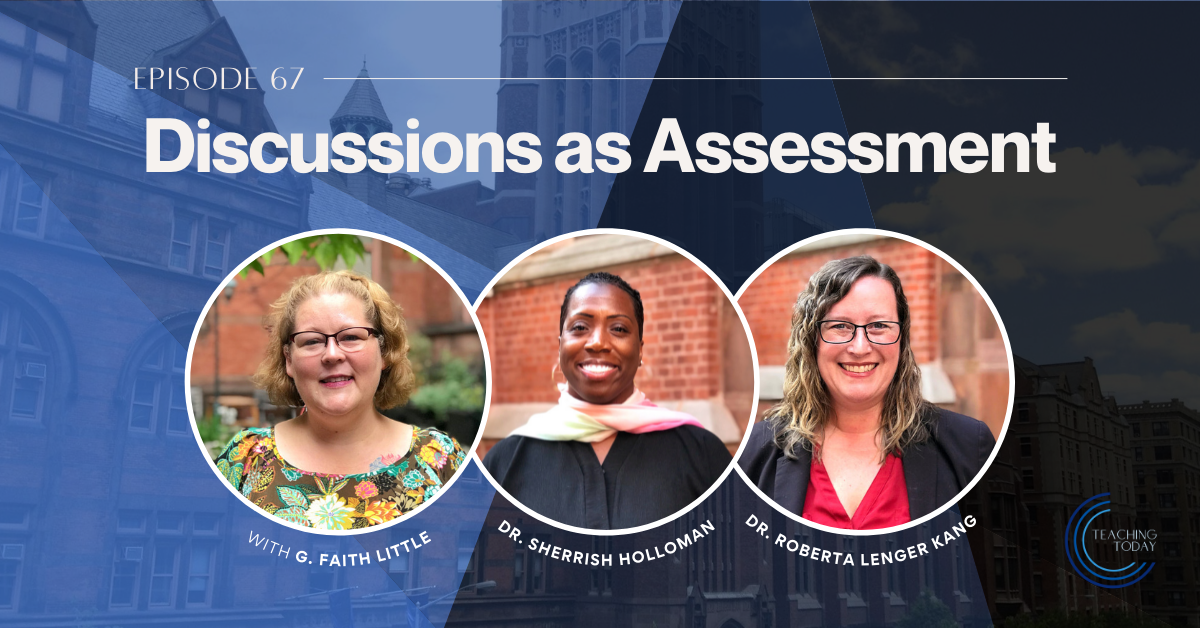
Episode 67: Discussions as Assessment

Comments

Picture
In this episode
Discussions are an important component of 21st century learning in all disciplines; they help students process and communicate information, and help teachers better understand which concepts students are connecting with. 21st century learning specialist G. Faith Little joins us this week to unpack the benefits of classroom discussions, and how they can be a simple, authentic way to assess student learning. 
LISTEN ON:    AMAZON MUSIC   •   APPLE   •   AUDIBLE   •   SOUNDCLOUD   •   SPOTIFY
Final thoughts
Imagine you’re a teacher who wants to begin or refine the use of discussion in your classroom — what’s the smallest thing you can do to make the biggest difference?
​
Picture
G. Faith Little
Start small with activities and call out the practice — as in "okay, we're going to have a discussion and this time we're going to do it in pairs, or this time we're going to do it in small groups" — until it becomes commonplace.  

Picture
Dr. Roberta Lenger Kang
Develop norms (in collaboration with students, if possible) to create a community and identify the kinds of behaviors that you expect for a discussion.

​
Picture
Dr. Sherrish Holloman
Include discussions as a daily part of the educational experience in your classroom; start small with three-minute discussions, five-minute discussions, and gradually build on the practice from there.

​
Related posts
  • ​Exit tickets as formative assessments
  • Rethinking baseline assessments​
  • Micro assessments for student learning
TAGS: ASSESSMENT, TEACHING TODAY
Comments
    ←  BACK TO ALL ARTICLES

    Picture
    SEARCH BY TOPIC
    21st century skills
    Adult learning
    Assessment & testing
    Classroom culture & SEL
    Classroom management
    CRSE / CRSP
    Curriculum
    Data-driven instruction
    Growth & goals
    Leadership & teams
    Literacy
    Project-based learning
    Rigorous instruction
    Student engagement

    Picture
    Picture
    Picture
    Picture
    Picture

    Picture
    Get started
Picture
The Center for Professional Education of Teachers (CPET) at Teachers College, Columbia University is committed to making excellent and equitable education accessible worldwide. ​CPET unites theory and practice to promote transformational change. We design innovative projects, cultivate sustainable partnerships, and conduct research through direct and online services to youth and educators. Grounded in adult learning theories, our six core principles structure our customized approach and expand the capacities of educators around the world.

ABOUT US

525 West 120th Street, Box 182
New York, NY 10027
​416 Zankel

Ph: (212) 678-3161
[email protected]

Our Team
Career Opportunities
EDUCATOR RESOURCES

Book of the Month
Online Courses
Professional Articles
Ready-to-Use Resources
Teaching Today Podcast
COACHING SERVICES

Custom Coaching
Global Learning Alliance
Literacy Unbound
​New Teacher Network
Student Press Initiative
MAKE A DIFFERENCE

​​Every gift is an investment in equitable education. With your support, we can continue to bring transformative change for K-12 teachers, leaders, and students worldwide. 
Donate

  • Home
  • Who We Are
    • Our Team
    • Our Partnerships
    • Our Authors
    • In the News
    • Principles of Practice
    • Job Opportunities
  • What We Do
    • Services
    • Areas of Focus >
      • Equity in Action
      • Teaching with Danielson
    • Signature Initiatives >
      • Literacy Unbound
      • New Teacher Network
      • Student Press Initiative
  • Educator Essentials
  • Support CPET